Currently Empty: $0.00

If your scalp feels tight after washing, gets flaky by midday, or seems to sit in a constant cycle of dryness and buildup, the oil you choose matters more than the hype on the label. Finding the best castor oil for scalp care is less about picking the trendiest bottle and more about choosing the right purity, texture, and routine for your hair type.
Castor oil has a long reputation in beauty and wellness, but not every bottle performs the same way on the scalp. Some formulas are too thick to spread comfortably. Others are diluted, heavily fragranced, or packaged in ways that make consistent use annoying. If you want an oil that actually fits into a real routine, the details matter.
What makes the best castor oil for scalp use?
The best option is usually pure, cold-pressed, hexane-free castor oil with minimal processing. That combination gives you a product that stays close to its natural composition while avoiding unnecessary additives. For scalp use, that matters because the scalp is skin first. If the formula is overloaded with fragrance, fillers, or mystery blends, it can feel irritating instead of supportive.
Texture matters too. Castor oil is naturally thick and dense, which is part of why people like it for dry areas. That same richness can also be a drawback if your scalp runs oily, if you have fine hair, or if you do not wash frequently. A good castor oil should feel substantial, but it should still be easy enough to warm between your palms and distribute across the scalp without tugging at the roots.
Packaging is easy to overlook, but it affects whether you use the product consistently. A bottle with a controlled pour or dropper is more practical than one that dumps out too much product at once. Routine-friendly products tend to get used. Products that create a mess usually end up forgotten in a cabinet.
Why people use castor oil on the scalp
Most people reach for castor oil because they want a scalp that feels less dry and hair that looks healthier over time. Castor oil works mainly as an occlusive oil, which means it helps seal in moisture rather than acting like a water-based hydrator on its own. That distinction is useful. If your scalp is dry, applying castor oil after a hydrating step or onto slightly damp skin often makes more sense than using it on a bone-dry scalp.
It can also help soften the feel of dry patches and reduce that rough, tight sensation some people get between wash days. For textured hair, protective styles, or high-manipulation routines, castor oil is often used to support moisture retention around the scalp and hairline. For straight or fine hair, smaller amounts usually work better.
That said, castor oil is not a cure-all. If scalp issues are tied to dandruff, dermatitis, psoriasis, or sensitivity, oil alone may not solve the root problem. Sometimes it helps. Sometimes it makes buildup worse. That is why product choice and application method matter just as much as the ingredient itself.
How to tell if a castor oil is high quality
Start with the ingredient list. Ideally, it should say only castor oil, preferably organic if that aligns with your preference for clean-label products. The fewer extras, the easier it is to know what your scalp is responding to.
Next, look for processing language. Cold-pressed and hexane-free are useful quality markers because they suggest a cleaner production approach. For shoppers who care about purity cues, this is often the difference between a basic commodity oil and one that feels aligned with a premium wellness routine.
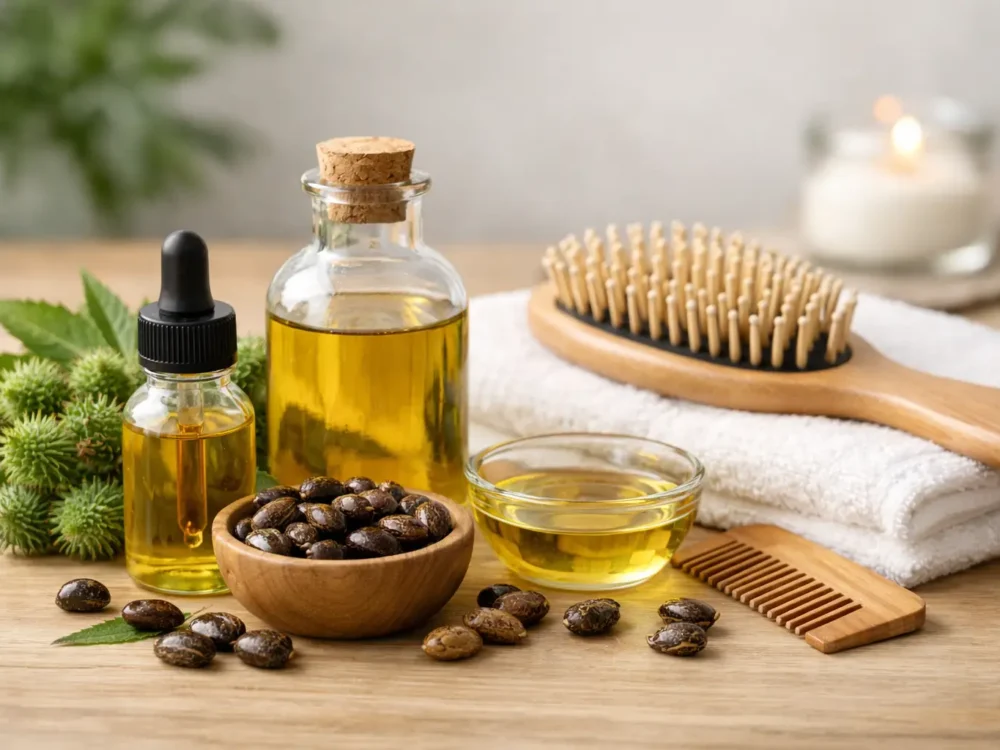
Color can vary. Regular castor oil is typically pale yellow to golden, while Jamaican black castor oil is darker because of the roasting process used on the beans. Neither is automatically better for everyone. Traditional castor oil often feels a bit cleaner and lighter, while Jamaican black castor oil is usually favored by people who want a richer feel. If your scalp gets clogged easily, the lighter-feeling option may be easier to live with.
Smell is another clue. Pure castor oil has a natural, earthy scent. It should not smell heavily perfumed unless fragrance has been added. For sensitive scalps, fragrance-free is usually the safer choice.
Regular castor oil vs. Jamaican black castor oil
This is where buying the best castor oil for scalp care becomes more personal. Regular castor oil is often the better fit if you want a cleaner, simpler oil for routine use. It is especially practical for people with fine hair, oily scalps, or anyone who dislikes heavy residue.
Jamaican black castor oil is usually chosen by those with coily, curly, or very dry hair because it feels richer and can pair well with moisture-focused routines. Many people love that heavier finish. Others find it too much for the scalp itself and prefer using it mainly on the hair lengths or edges.
There is no universal winner. If your scalp is dry and your hair texture is thicker, black castor oil may feel more satisfying. If you want versatility and easier washout, regular cold-pressed castor oil is often the smarter buy.
What to avoid when shopping
Blended oils are not always bad, but they can make it harder to judge effectiveness. If a product says castor oil on the front but mixes it with mineral oil, synthetic fragrance, or a long list of extras, you are not really getting a straightforward castor oil experience.
Be cautious with strong essential oil blends if your scalp is reactive. Peppermint, rosemary, and tea tree are popular in scalp products, but more is not always better. A tingling feeling can seem convincing, yet sensitive skin may disagree after a few uses.
Very cheap castor oil can also be a red flag. Price alone does not prove quality, but extremely low-cost products sometimes cut corners on sourcing, purity, or packaging. If you are using the oil close to the skin and expecting visible hair care benefits, clean sourcing is worth paying for.
How to use castor oil without causing buildup
The biggest mistake is using too much. Because castor oil is thick, a little goes a long way. Part your hair in sections, place a few drops along the scalp, and massage gently with your fingertips for a minute or two. You want a light coating, not a heavy layer that sits on the skin.
For most people, once or twice a week is enough. If you wash often, you may be able to use it more regularly. If you stretch wash days or have a scalp that gets oily fast, weekly use may be the better rhythm.
You can also dilute castor oil with a lighter oil if the texture feels too heavy. This works well for beginners or anyone who wants scalp comfort without the sticky after-feel. The goal is consistency, not overload.
Leave-on use works for some people, while others do better with a short pre-wash treatment. If your roots flatten easily or your scalp gets congested, applying castor oil 30 to 60 minutes before shampooing may give you the benefits without the residue.
Who should choose a lighter routine?
If you have fine hair, low-density hair, or a scalp that already produces a lot of oil, castor oil can still work, but the routine needs to stay minimal. Think a few drops, not a full scalp soak. Focus on dry zones instead of coating everything.
If you are acne-prone around the hairline or forehead, watch how your skin responds. Heavy oils can migrate, especially overnight. In that case, a pre-wash treatment is often more practical than leaving the oil on for long periods.
For busy professionals and anyone who wants a low-effort routine, the best product is the one that fits your schedule. A pure, easy-pour, organic castor oil is often enough. You do not need a complicated scalp routine to be consistent.
So what is the best castor oil for scalp results?
For most people, the best choice is an organic, cold-pressed, hexane-free castor oil with no added fragrance and simple packaging that makes application easy. That gives you the strongest balance of purity, usability, and routine-friendly performance.
If your scalp is very dry and your hair is thick or textured, Jamaican black castor oil may be worth considering. If you want a more versatile option with easier washout, traditional cold-pressed castor oil is usually the better place to start.
Brands that emphasize clean-label standards, cruelty-free positioning, and straightforward ingredient integrity tend to stand out here. That is why many wellness shoppers look for products that feel both traditional and modern – simple ingredients, better quality markers, and packaging that supports everyday use. If you are building a cleaner hair care routine, a well-sourced organic castor oil from a brand like Sterling Nutrition fits that direction well.
The best castor oil for your scalp is not the one with the loudest claim. It is the one you can use comfortably, consistently, and without turning your routine into a chore.